China sends its youngest astronaut to ‘Heavenly Palace’ space station
中国将最年轻航天员送往”天宫”空间站
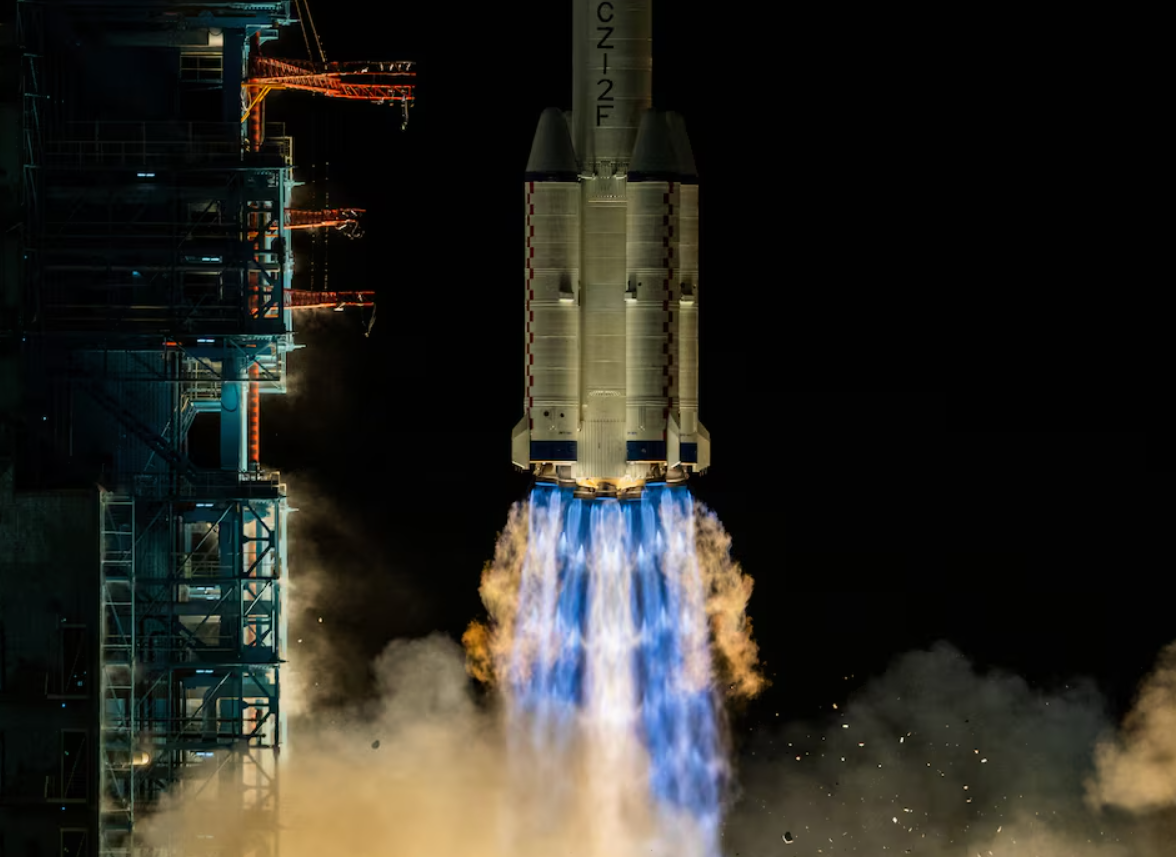
BEIJING, Oct 31 (Reuters) – China’s Shenzhou-21 space rocket and its crew including the youngest member of its astronaut corps blasted off on Friday atop a Long March-2F rocket from the Jiuquan Satellite Launch Centre in northwest China, Chinese state media reported.
北京 10 月 31 日电(路透社)——据中国官方媒体报道,中国神舟二十一号载人飞船及其乘组于周五在西北酒泉卫星发射中心由长征二号 F 火箭发射升空,乘组中包含中国航天员大队最年轻成员。
It was the seventh mission to the permanently inhabited Chinese space station since it was completed in 2022.
这是自 2022 年中国空间站全面建成以来,第七次前往这座长期驻人空间站的飞行任务。
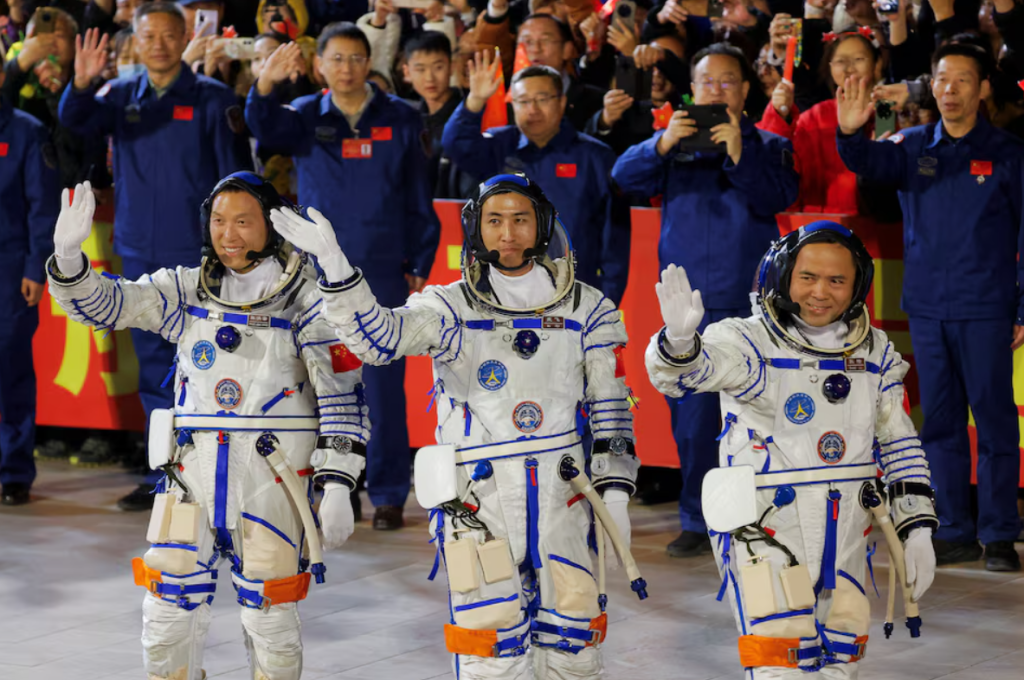
Missions on China’s Shenzhou-21 spacecraft involve trios of astronauts on six-month stays in space, with veteran astronauts increasingly replaced by younger faces. First-timers Zhang Hongzhang, 39, and Wu Fei, 32 – China’s youngest astronaut to be sent to space – were picked to participate in the programme in 2020.
中国神舟二十一号载人飞船任务采用三人乘组模式,执行为期六个月的太空驻留任务,资深航天员正逐渐被年轻面孔取代。首次执行任务的 39 岁张宏章与 32 岁吴飞——中国迄今派往太空的最年轻航天员——于 2020 年被选拔参与该项目。
Commander Zhang Lu, 48, flew on the 2022 Shenzhou-15 mission.
48 岁的指令长张陆曾执行 2022 年神舟十五号飞行任务。
FIRST SMALL MAMMALS ON SPACE STATION
空间站迎来的首批小型哺乳动物
The Shenzhou-21 astronauts will take over from the Shenzhou-20 crew who had lived and worked on board Tiangong, or “Heavenly Palace”, for more than six months. The Shenzhou-20 astronauts will return to Earth in the coming days.
神舟二十一号航天员将接替已在”天宫”空间站驻留工作半年之久的神舟二十号乘组。神舟二十号航天员将于近日返回地球。
The Shenzhou-21 crew were also joined by four black mice, the first small mammals to be taken to the Chinese space station. The mice will be used in experiments on reproduction in low Earth orbit.
与神舟二十一号乘组同行的还有四只黑鼠,这是首次被送往中国空间站的小型哺乳动物。这些小鼠将用于近地轨道生殖实验。
Biannual launches have become the norm for the Shenzhou programme, which has in the past year reached new milestones with the deployment of Chinese astronauts born in the 1990s, a world-record spacewalk, and plans to train and send the first foreign astronaut, from Pakistan, to Tiangong next year.
神舟系列任务已形成每半年发射一次的常态。过去一年间,中国航天事业接连实现多项突破:首现”90 后”航天员、创造太空行走世界纪录,并计划于明年培训并派遣首位来自巴基斯坦的外国航天员进驻天宫。
The rapid advances have raised alarm bells in Washington, which is now racing to put a U.S. astronaut on the moon again before China does.
中国的飞速进展已在美国敲响警钟,华盛顿正全力争取在中国之前再次将美国宇航员送上月球。
Both countries are also competing in nascent institution-building efforts, with the U.S.-led Artemis Accords on lunar exploration matched up against the Chinese and Russian-led International Lunar Research Station.
两国在新兴机制建设方面也展开竞争,美国主导的《阿尔忒弥斯协定》与中国和俄罗斯牵头的国际月球科研站形成对峙之势。